Understanding Progressive Jackpot Mechanics Across Virtual Blackjack Environments
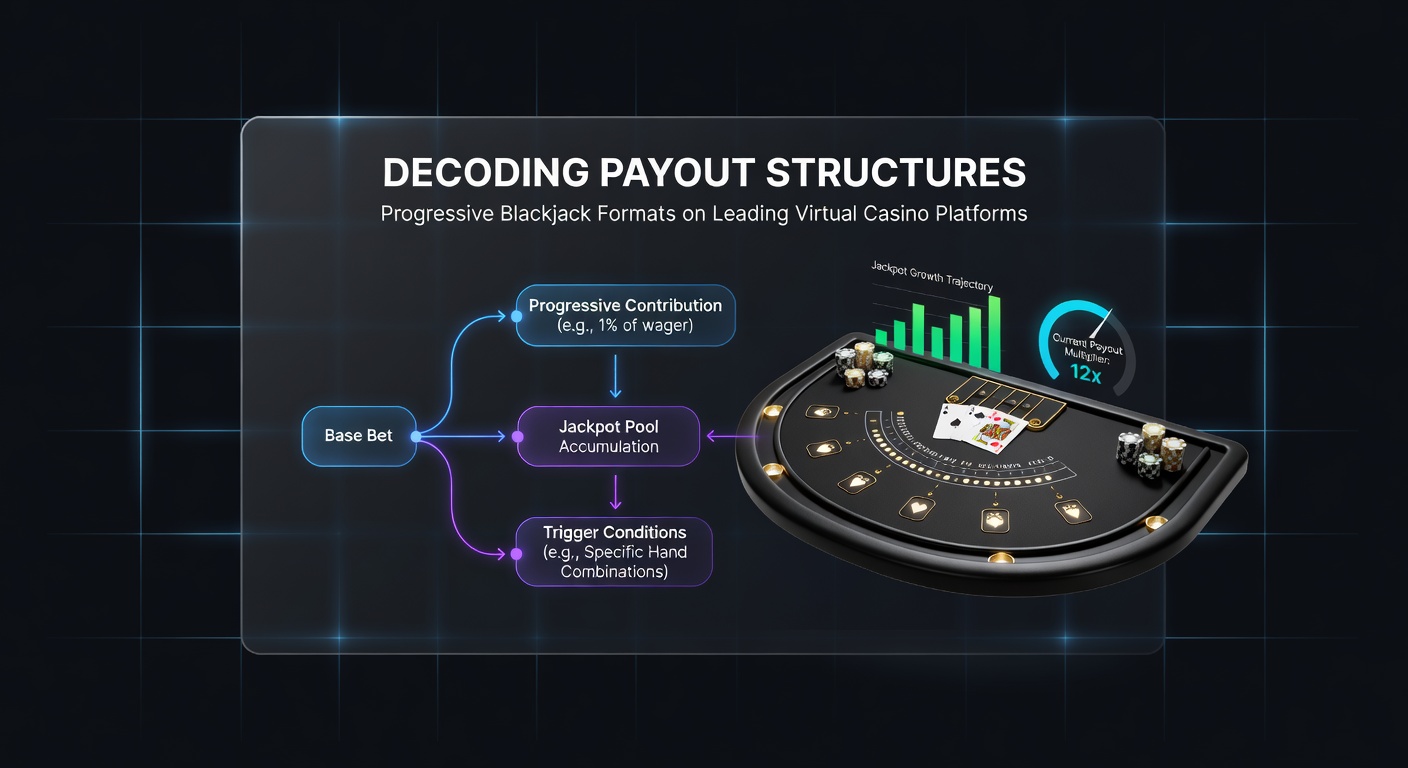
Progressive blackjack formats operate through a distinct side-bet structure that feeds into a shared jackpot pool across multiple virtual tables and platforms, creating payout tiers that scale with player participation rather than remaining fixed at standard blackjack odds. Leading online operators implement these systems by allocating a small percentage of each qualifying side bet into a central meter that continues to grow until specific hand combinations trigger a payout, and data from industry reports shows these pools often reach seven or eight figures before distribution occurs.
Core Components of Progressive Side Bets
Players place a separate wager alongside their main blackjack bet, typically ranging from one to five dollars depending on the platform, with a fixed portion directed toward the progressive meter while the remainder covers smaller fixed payouts for lower-tier hands such as suited blackjacks or three-of-a-kind combinations. Researchers at various gaming analysis firms have documented that the probability of hitting the top progressive tier usually falls between one in 200,000 and one in 500,000 hands, depending on the exact ruleset employed by each operator.
Payment structures break down into multiple levels where the jackpot itself activates only on premium outcomes like a royal flush in spades or a specific suited sequence, while intermediate awards remain constant regardless of meter size. Observers note that this tiered approach allows platforms to maintain consistent smaller rewards that encourage repeated side-bet placement without requiring the full progressive amount to hit frequently.
Platform-Specific Variations in Meter Growth and Distribution
Virtual casinos differentiate their progressive offerings through varying contribution rates, with some allocating 10 percent of each side bet to the pool and others capping contributions at lower percentages to balance player appeal against operational costs. As of May 2026 several major platforms adjusted their allocation formulas following updates to remote gambling standards in multiple jurisdictions, resulting in slightly slower meter growth but more frequent intermediate payouts that keep participation levels steady.
Distribution rules also differ by region, since operators licensed under frameworks such as those overseen by the New Jersey Division of Gaming Enforcement must adhere to audited random number generators and transparent meter tracking, whereas platforms regulated through other bodies apply comparable verification processes tailored to their local requirements. Figures from aggregated platform data indicate that average payout frequency for the full progressive award occurs roughly once every three to four months on high-traffic networks.

Mathematical Models Behind Payout Calculations
Operators calculate expected returns by combining the fixed payout percentages for non-progressive tiers with the theoretical value of the growing jackpot, which increases in attractiveness as the meter climbs. Studies compiled by academic research groups have shown that the house edge on progressive side bets typically lands between 5 and 12 percent when measured across teh full payout spectrum, although this edge narrows temporarily when the meter exceeds certain thresholds.
Software providers supply the underlying algorithms that track contributions across networked tables, ensuring each hand outcome updates the central meter in real time and that simultaneous wins on linked platforms trigger proportional splits according to pre-established contribution ratios. Those who analyze these systems emphasize that transparent reporting of historical payout data helps players understand long-term return patterns without guaranteeing short-term results.
Regulatory Oversight and Reporting Standards
Regulatory bodies require periodic audits of progressive systems to confirm that meters accurately reflect player contributions and that payouts process without delay once qualifying hands appear. Reports issued through organizations such as the Malta Gaming Authority document compliance metrics that include meter integrity checks and player fund segregation protocols, while similar reviews conducted in other jurisdictions focus on equivalent safeguards adapted to regional legislation.
Platform operators publish periodic summaries that list recent jackpot hits along with average contribution volumes, allowing independent verification of the systems in use. Data indicates that cross-platform linkage has become more common since 2024, expanding the player base feeding each meter and thereby accelerating growth rates on networks that connect multiple virtual casino environments.
Conclusion
Progressive blackjack formats on leading virtual platforms rely on carefully engineered side-bet structures, tiered payout schedules, and real-time meter management to deliver variable rewards that scale with participation. Regulatory frameworks across different regions enforce consistent standards for transparency and verification, while mathematical models guide both operators and players in assessing long-term expectations. Continued evolution of these systems through software updates adn jurisdictional adjustments ensures they remain a distinct feature within online blackjack offerings.