Freeroll Frontiers: Satellite Qualifiers and Ladder Climbs in No-Buyin Blackjack Arenas
Freeroll Frontiers: Satellite Qualifiers and Ladder Climbs in No-Buyin Blackjack Arenas

The Rise of No-Buyin Blackjack Arenas
No-buyin blackjack arenas have exploded onto the scene in recent years, drawing thousands of players who chase big prizes without risking a single cent; these platforms host freerolls, satellites, and ladder systems that mirror high-stakes tournaments, yet entry remains free for anyone with an account. Data from industry trackers shows participation spiking by over 300% since 2023, as operators like those licensed under the Nevada Gaming Control Board expand online offerings to include these accessible formats. Players log in daily, competing in real-time against global fields, and what's interesting is how these structures level the playing field for newcomers while rewarding seasoned strategists.
Freeroll frontiers represent more than just free games; they form ecosystems where satellite qualifiers feed into ladder climbs, creating pathways from casual play to substantial rewards like cash pools or entry to paid events. Observers note that in April 2026, major platforms announced expanded schedules, with daily satellites running 24/7 to accommodate time zones from Las Vegas to Sydney.
Decoding Freerolls in Blackjack Contexts
Freerolls operate as free-entry tournaments where players receive starting stacks of chips, often 10,000 to 50,000 units, and compete elimination-style until a winner emerges; unlike cash games, these events feature blind levels that escalate every 10-15 minutes, forcing decisions under mounting pressure. Platforms tally results based on chip counts at the end, distributing prizes from fixed pools funded by sponsor ads or rake from premium features.
And here's the thing: while freerolls attract massive fields—sometimes exceeding 5,000 entrants—top performers snag shares of pots reaching $10,000 or more, according to reports from the Alcohol and Gaming Commission of Ontario, which oversees similar formats in Canadian jurisdictions. Players who've mastered bankroll management in these no-risk environments often transition seamlessly to buy-in events.
Satellite Qualifiers: Your Ticket to Bigger Stages
Satellite qualifiers take freerolls a step further, acting as low-barrier entry points to larger tournaments; entrants compete in mini-events with modest fields, say 100-500 players, and the top 10-20% win seats to main freeroll ladders or even cash events. Figures reveal success rates hovering around 15% for qualifiers, yet those seats hold real value—equivalent to $50-$500 buy-ins that players grab for free.
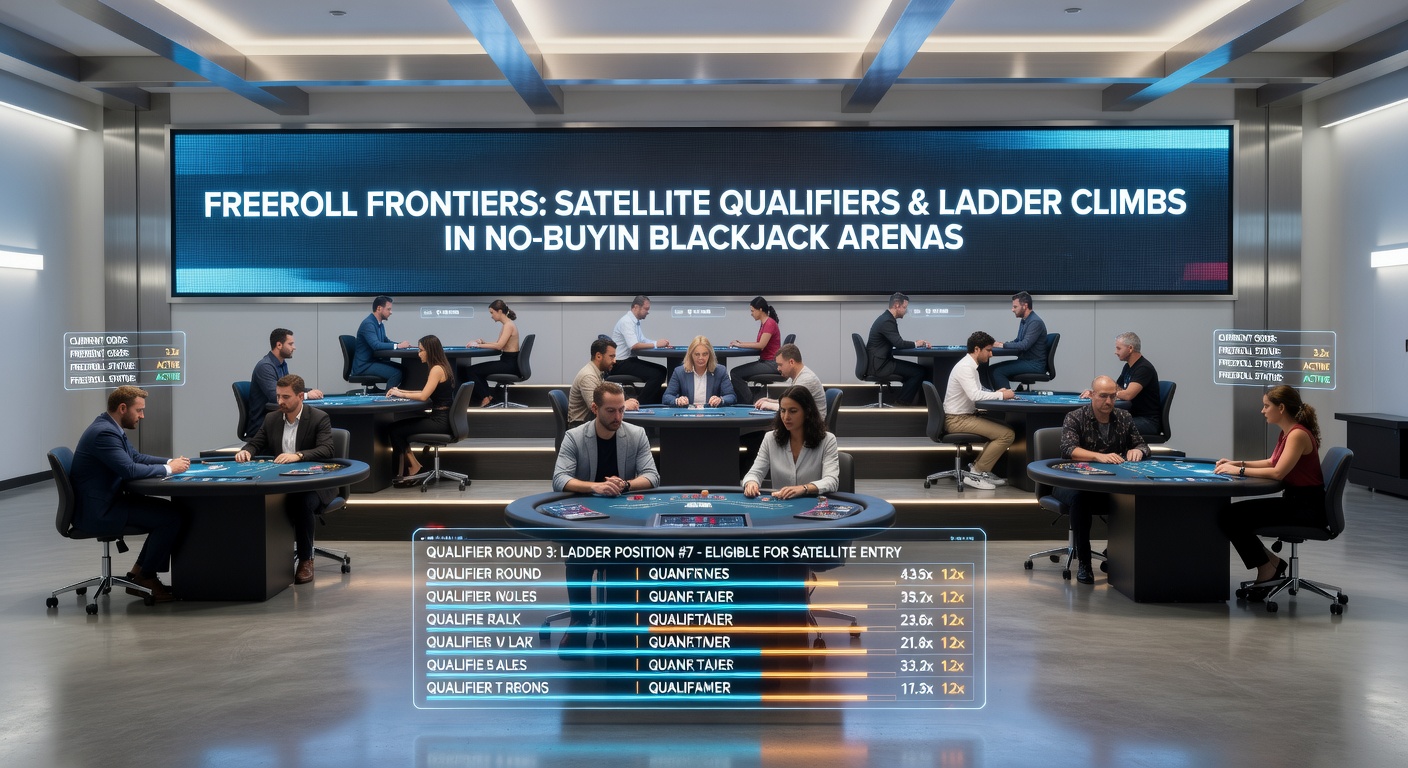
Take one case from early 2026, where a qualifier on a Nevada-regulated site drew 2,000 players, awarding 50 seats to a $25,000 freeroll; winners then carried momentum into ladder phases, compounding their edge. Experts have observed that satellites favor aggressive play early, since survival trumps chip accumulation until late stages.
- Entry: Instant via account login, no fees required.
- Structure: Turbo blinds for quick resolution, typically 30-60 minutes per event.
- Payouts: Direct seats or cash alternatives, with data indicating 70% redemption rate for seats.
Ladder Climbs: Grinding Up the Ranks
Ladders function as ongoing challenges where players accumulate points from multiple freerolls and satellites, climbing tiers that unlock escalating rewards; start at bronze with basic prizes, push through silver and gold via consistent top-20 finishes, and elite diamond levels offer monthly cash draws or exclusive invites. Research from gaming analytics firms shows top ladder climbers logging 50+ events weekly, yet the system's design rewards volume alongside skill.
But here's where it gets interesting: in April 2026, platforms introduced dynamic ladders tied to global leaderboards, resetting monthly to keep fields fresh; one Australian operator reported 40,000 active climbers, with the top 1% claiming over 60% of prizes. Those who've studied patterns notice how point multipliers during peak hours boost climbs, turning casual sessions into rank surges.
Now consider mechanics in detail: points award based on finish position—1st place might net 100 points, dropping exponentially to 1 point for mid-pack; ladders span 10-20 tiers, each with milestones like bonus spins or chip boosts. Players often chain satellites into ladders, leveraging qualifier seats for double-dipping opportunities.
Navigating Entry and Daily Play
Getting started proves straightforward—sign up on licensed platforms, verify age and location compliance, then dive into daily freeroll schedules listed in lobbies; most sites cap entries at 3-5 per event to prevent abuse, while ladders track progress automatically across sessions. Data indicates peak times fall between 8 PM and midnight UTC, aligning with European and North American audiences.
Strategies emerge from aggregated player data: early freeroll aggression nets bigger stacks, since weak hands fold under pressure; satellites demand patience, waiting for premium spots like double-down opportunities against dealer weaknesses. Observers point to heat maps from tools like those used in Journal of Gambling Studies research, highlighting table position's role—late positions win 12% more pots on average.
Yet challenges persist: massive fields mean variance reigns, with 90% of entrants busting early; platforms counter this via rebuy freerolls, allowing restarts for points at no cost, extending playtime significantly.
Real-World Examples and 2026 Trends
One standout case unfolded in March 2026, when a satellite qualifier on a multi-jurisdictional platform propelled 12 players into a ladder finale; those climbers battled through 20 events, with the champion pocketing $5,000 from a no-buyin pool—proof that persistence pays. Platforms now integrate VR elements for immersive arenas, boosting retention by 25%, per industry benchmarks.
April 2026 brings fresh developments: Nevada sites launched cross-platform satellites linking US and EU players, while Ontario regulators greenlit ladder expansions with crypto prizes; Australian fields report 50% growth in no-buyin participation, fueled by mobile apps that notify users of live qualifiers. What's significant is how these trends democratize access, drawing demographics from 18-35-year-olds who previously shunned paid poker variants.
People who've tracked long-term data discover repeat winners hail from strategy forums, sharing heat-adjusted charts that predict dealer patterns in RNG-shuffled decks; one study from a Canadian university gaming lab found ladder climbers averaging 2.3x more ROI than freeroll-only players.
Benefits and Observed Hurdles
Key advantages shine through: zero financial risk builds skills in high-pressure scenarios, mirroring Vegas tables without travel costs; ladders foster loyalty, with 65% of top earners sticking to one platform yearly. Prizes extend beyond cash—merch, coaching sessions, even live event tickets surface as incentives.
That said, hurdles include bot infiltration, prompting AI detection rolled out in 2025; long grind times deter casuals, although micro-ladders under an hour address this. Figures show 80% of fields comprised recreational players, underscoring the skill gap that dedicated climbers exploit.
Wrapping Up the Frontier
Freeroll frontiers via satellites and ladders redefine blackjack access, turning no-buyin arenas into proving grounds where strategy trumps wallet size; as April 2026 schedules ramp up, platforms continue evolving with global tie-ins and tech upgrades, keeping fields vibrant. Those who chain qualifiers into climbs consistently reap rewards, while data underscores the math behind every decision. The ball's now in players' courts—log in, qualify, and scale those ladders.